












This tour is free so everyone can enjoy it. But behind it are hours of preparation, passion, and love for this city. If you felt you discovered something special today, help us keep sharing it. With your donation, you make this possible. Thank you for valuing our work.
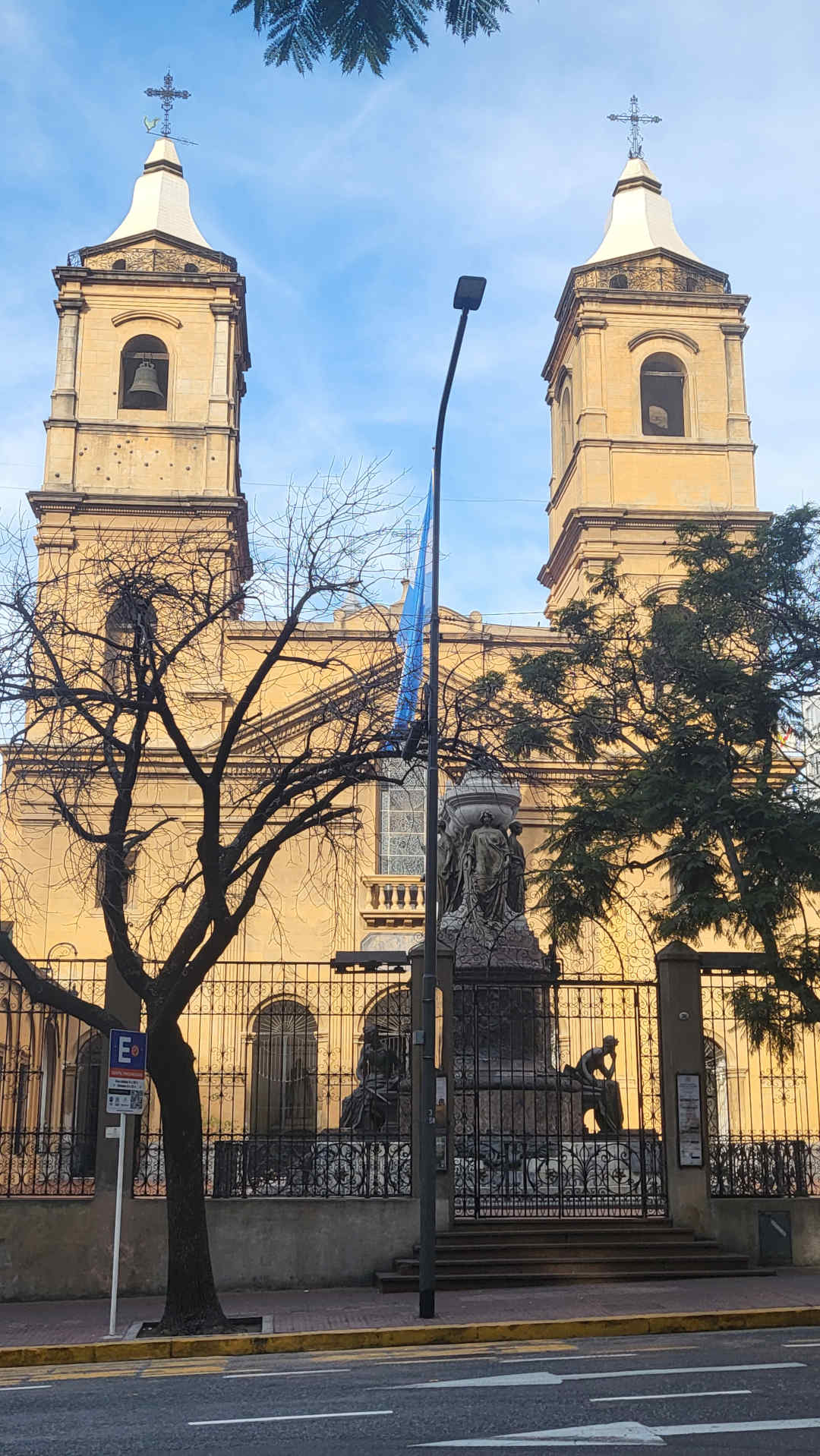




The Basilica of Our Lady of the Rosary and Convent of Saint Dominic is a Catholic church in Buenos Aires. In its atrium rest the remains of Manuel Belgrano and other Argentine national heroes. The Dominicans occupied the site since 1606, but the current construction began in 1751, designed by Antonio Masella. Work resumed in 1762 with the support of Juan de Lezica and the church was consecrated in 1783, still unfinished. The convent was started in 1792 and completed in 1805. During the British Invasions in 1806, General Liniers promised to donate captured flags if the city was retaken — a promise he fulfilled. These flags are still preserved in the church. In 1807, during the second invasion, the convent was the site of the Battle of Santo Domingo. The British used its tower as a stronghold until they were defeated. During its reconstruction, wooden plugs were placed to commemorate the bullet impacts from that battle.
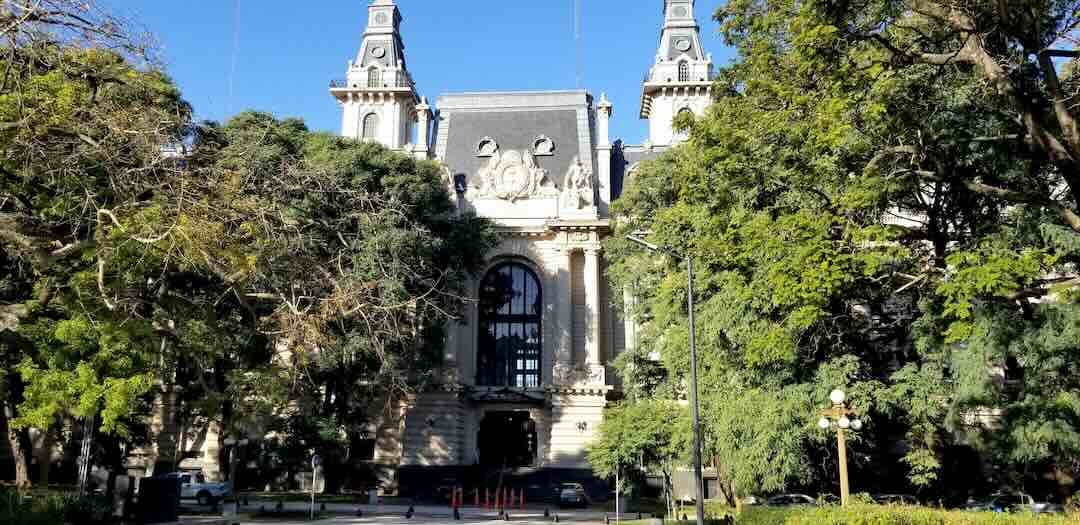
The Buenos Aires Customs House, located at 350 Azopardo Street, is the headquarters of the General Customs Directorate and was declared a National Historic Monument in 2009. Its origins date back to 1580, but it did not have its own building until centuries later. It operated in various rented locations, including the house of Domingo Basavilbaso (1783–1858), and later in the Taylor Customs House (1858–1896), which was demolished to make way for the construction of Puerto Madero. Due to the need for a modern building, a new one was planned on land reclaimed from the river. The design was by the Lanús and Hary studio in 1908, and construction began in 1909. It was inaugurated in October 1910 during the Centennial celebrations, although it began to be occupied in January 1911. The formal handover of the building took place in 1913, and the work was fully completed in 1915. It is considered an icon of Argentine institutional architecture.
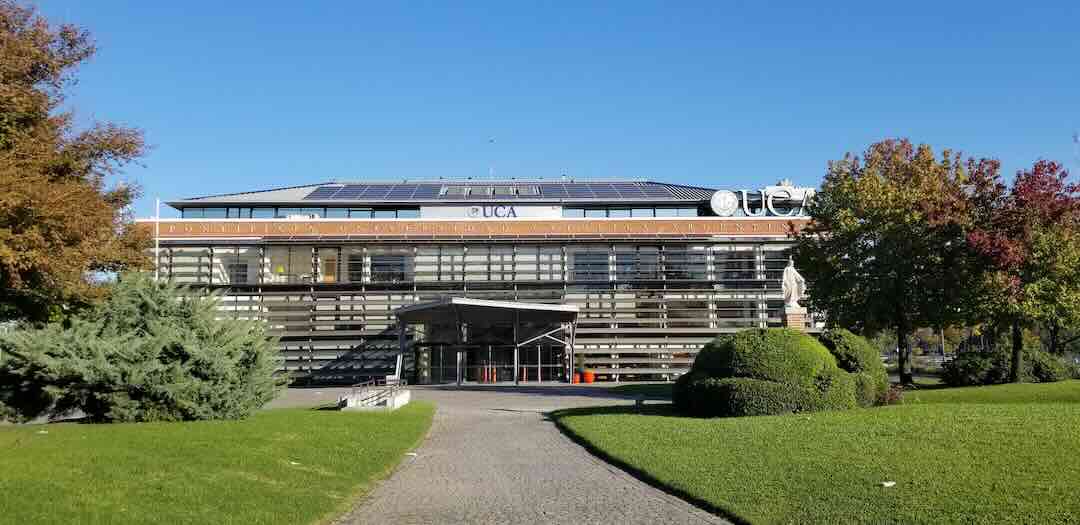
The Pontifical Catholic University of Argentina, officially *Pontificia Universidad Católica Argentina Santa María de los Buenos Aires* (UCA), is a private, religiously affiliated university headquartered in Puerto Madero, Buenos Aires. Its origins trace back to the Catholic University of Buenos Aires (1910–1922), which closed due to the lack of official recognition for its degrees. In 1922, the *Catholic Culture Courses* (C.C.C.) were established, considered the intellectual foundation of the UCA. These courses offered training in philosophy, economics, and the arts, promoting a Catholic and anti-liberal worldview. They were led by figures such as Tomás Darío Casares and included renowned professors like Derisi, Etcheverry Boneo, and Dell'Oro Maini. The original headquarters was on Reconquista Street, and the program also published academic and opinion works. Notable figures such as Onganía, Goyeneche, Bernárdez, and Marechal were associated with the C.C.C.
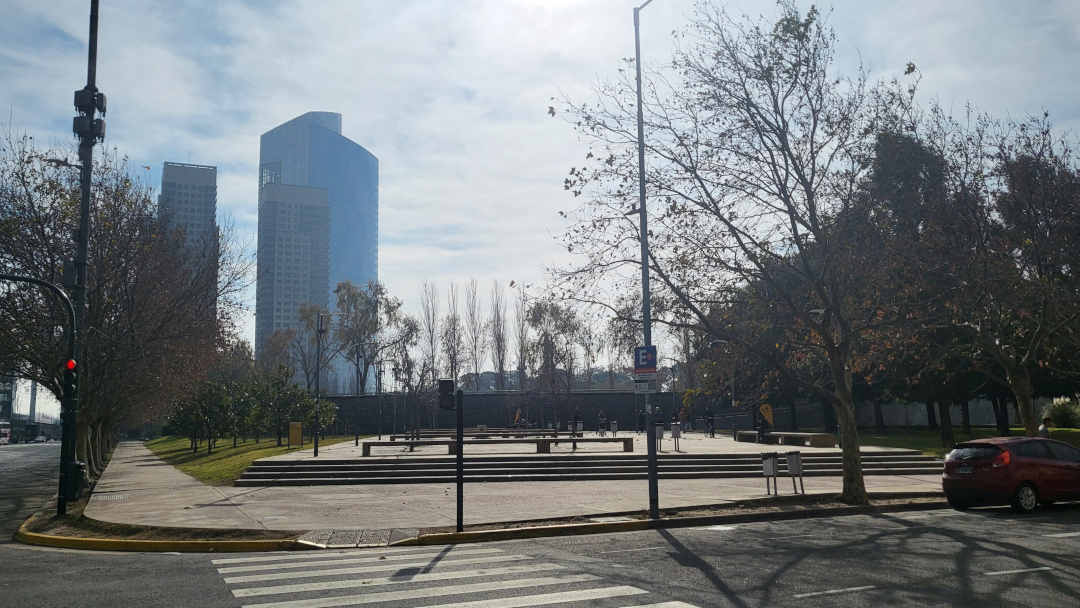
The Argentine Women’s Park (*Parque Mujeres Argentinas*) is located in Puerto Madero, Buenos Aires, on the eastern side of Dock 3. It covers an area of 5.37 hectares and was inaugurated with the presence of Néstor and Cristina Kirchner, along with Jorge Telerman. Singer Nacha Guevara performed during the ceremony. The park was designed in 1996 by a team of architects with landscape consulting by Estudio Ing. F. González y Asociados. Construction began in 2005 and was carried out by the company Caputo S.A.
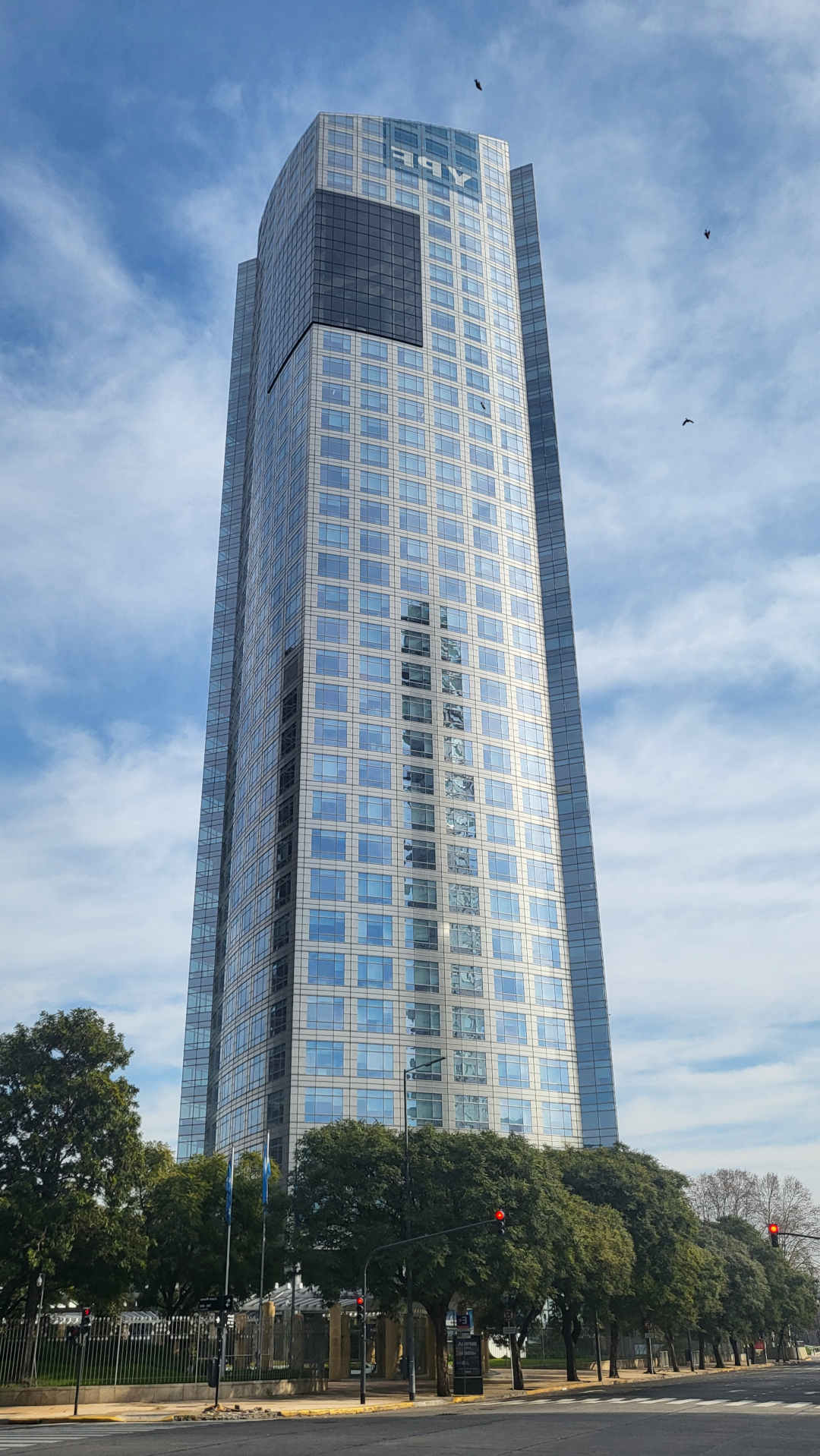
La Torre YPF, ubicada en Puerto Madero, Buenos Aires, es la sede central de la petrolera argentina YPF. Fue construida entre 2005 y 2008, tiene 160 metros de altura, 34 pisos y 14 ascensores. Diseñada por el estudio Pelli-Clarke-Pelli, es un exponente del postmodernismo y costó 134 millones de dólares. Se destaca por su diseño sustentable, con un bosque de eucaliptos del piso 26 al 31 y una pérgola verde en planta baja. Está formada por dos prismas yuxtapuestos, uno triangular y otro cuadrado, orientados para optimizar vistas al río y la ciudad. El remate inclinado de los volúmenes crea una silueta distintiva. Alberga oficinas para más de 2.000 empleados. Está emplazada en un área clave de desarrollo urbano y comercial.
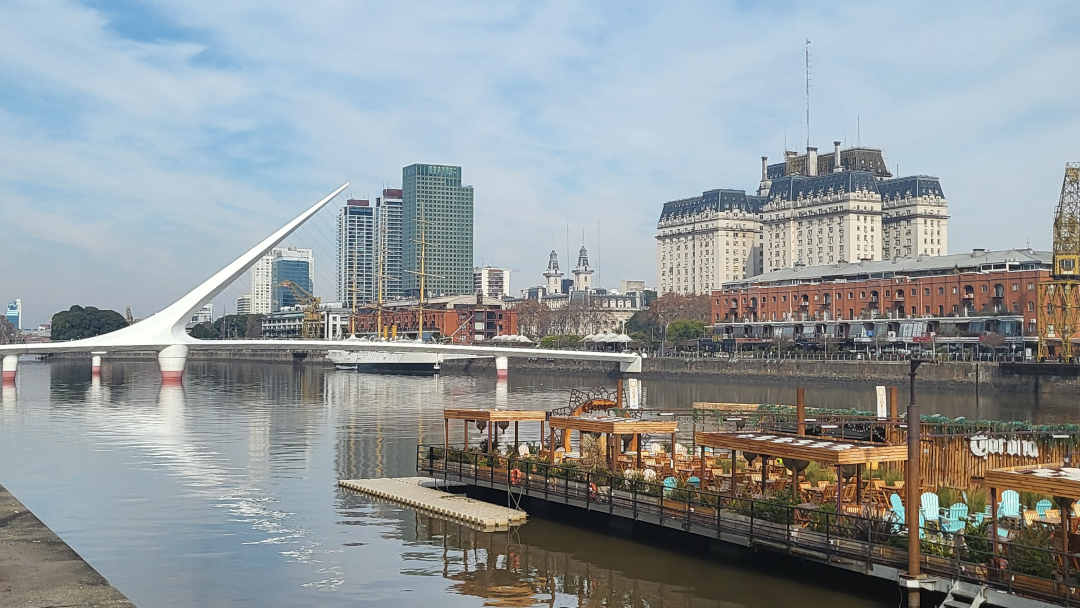
The Woman’s Bridge (*Puente de la Mujer*) is a cable-stayed bridge located at Dock 3 in Puerto Madero, Buenos Aires, designed by Santiago Calatrava. It is the architect’s first work in Latin America and symbolizes a couple dancing tango. The project was initiated and funded by businessman Alberto González, who donated 6 million dollars for its construction. It was manufactured in Vitoria, Spain, by the company Urssa, due to the lack of suitable steel in Argentina. Construction began in 1998, and the bridge was inaugurated on December 20, 2001. In 2022, its flooring was renewed with recycled plastic wood made from “love bottles” collected at city recycling points.
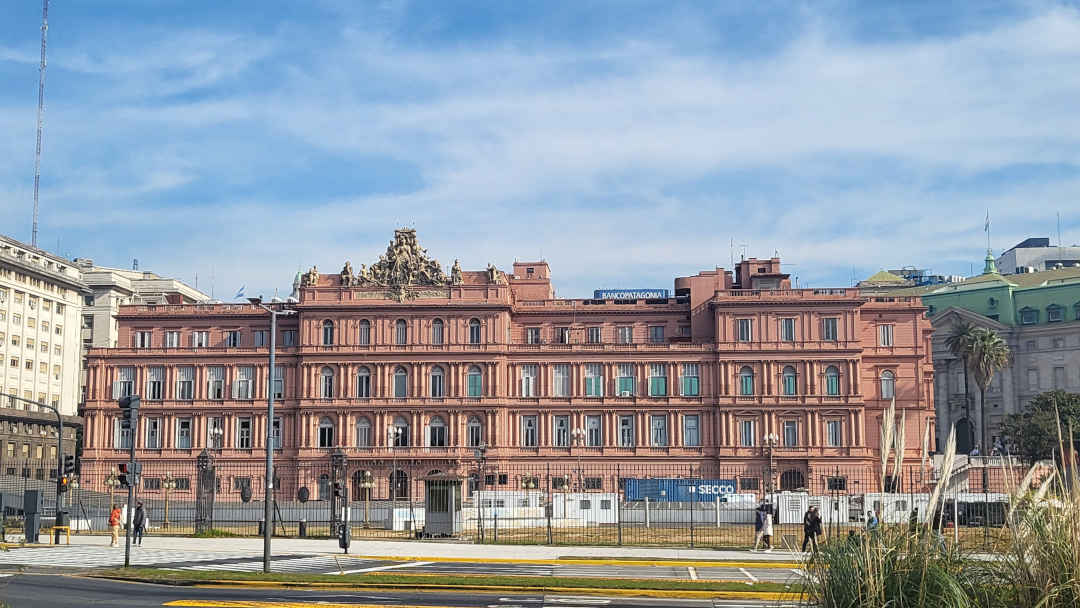
The Casa Rosada is the seat of the Argentine Executive Branch, located at 50 Balcarce Street, facing Plaza de Mayo. It houses the presidential office and was declared a National Historic Monument in 1942. It was built on the site of the old Buenos Aires fortress, originally constructed in 1594 and later modified by successive governments. In the 19th century, President Sarmiento had it painted pink — a color symbolizing the unity between Unitarians and Federalists, though also used for technical reasons. In 1873, the Post Office Palace was planned and completed in 1879. Later, to unify the two buildings, architect Tamburini designed the iconic monumental arch, with construction starting in 1886. By 1898, the Casa Rosada had taken on its current appearance. Parts of the original fortress are still preserved in the Bicentennial Museum.
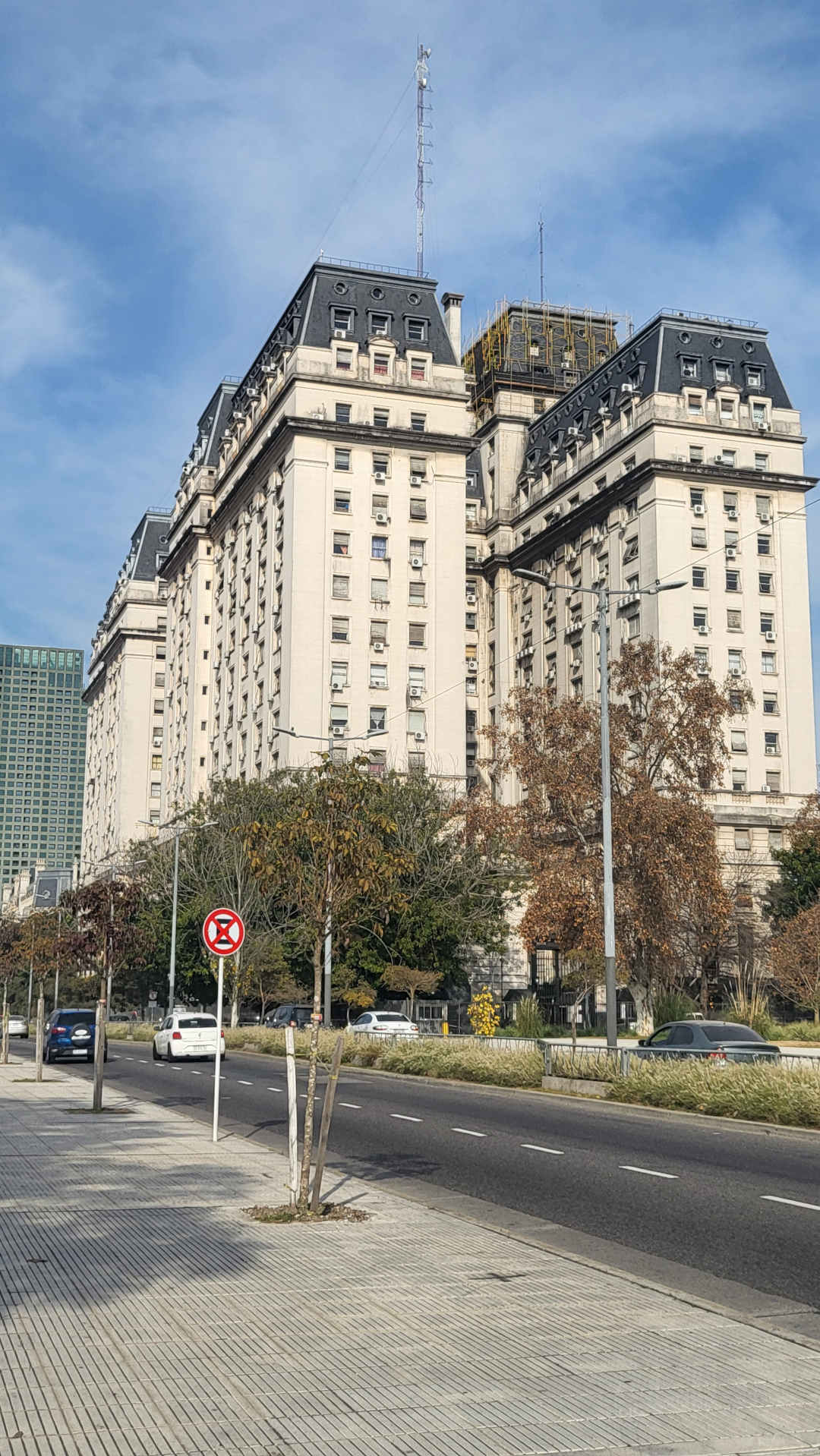
The Libertador Building is the headquarters of the Ministry of Defense, the Army General Staff, and the Joint Chiefs of Staff of the Armed Forces. It is located at 250 Azopardo Street, Buenos Aires. Designed in 1935 by Carlos Pibernat, it began construction in 1938 as the seat of the then Ministry of War. It is a monumental building in French academic style, with 16 floors, internal courtyards, and an underground tunnel connecting it to the Casa Rosada. It was inaugurated in 1943 and received its current name in 1950 in honor of José de San Martín. In 1955, Perón took refuge there during a bombing. In 1976, it was attacked with a bomb by the Montoneros. In 1990, during a “Carapintada” military uprising, the building was briefly taken over by rebel soldiers.
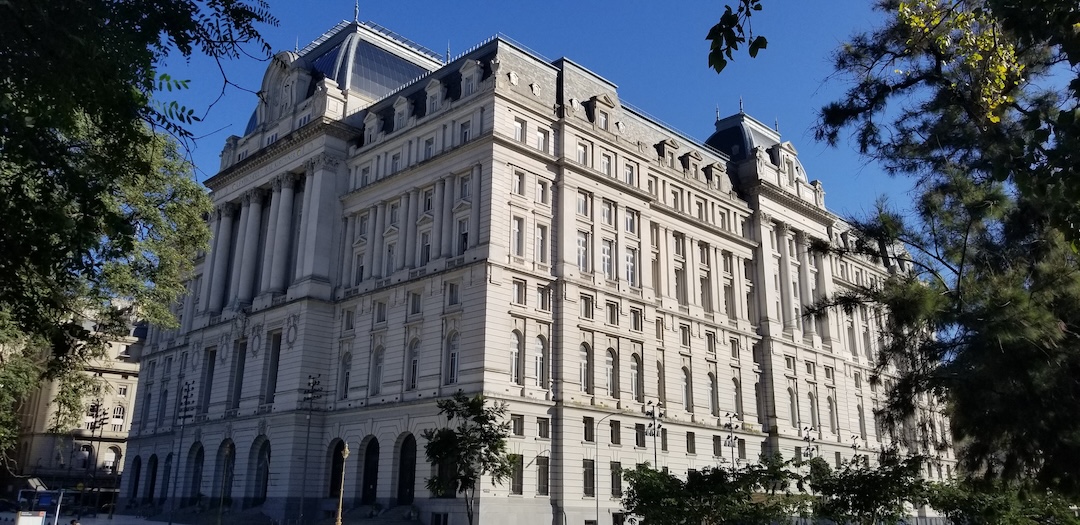
The Palacio Libertad, also known as the Domingo Faustino Sarmiento Cultural Center, is located in the San Nicolás neighborhood of Buenos Aires. It is the largest cultural center in Latin America and the third largest in the world by size. It operates in the building of the former Central Post Office and was inaugurated in 2010 as the Bicentennial Cultural Center. It was later named the Kirchner Cultural Center (CCK) until October 2024, when it was renamed by the government through Decree 897/2024. It represents the largest cultural investment in Argentine history.
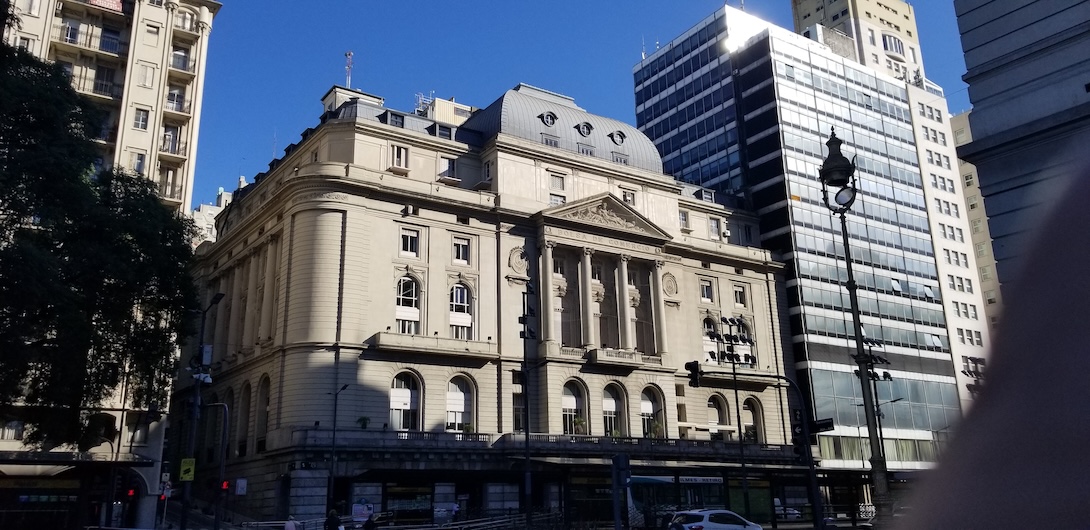
The Buenos Aires Stock Exchange, founded in 1854, is Argentina’s main financial center. It is a non-profit civil association, regulated by Law 17.811 and overseen by the National Securities Commission (CNV). It handles the trading of stocks, bonds, currencies, and futures, and features indicators such as the Merval index. It has its own arbitration tribunal and requires listed companies to submit quarterly financial reports — 134 companies were listed in 1999. The Exchange may suspend trading to prevent market distortions. It is part of the Group of Eight, along with other major business entities in the country.
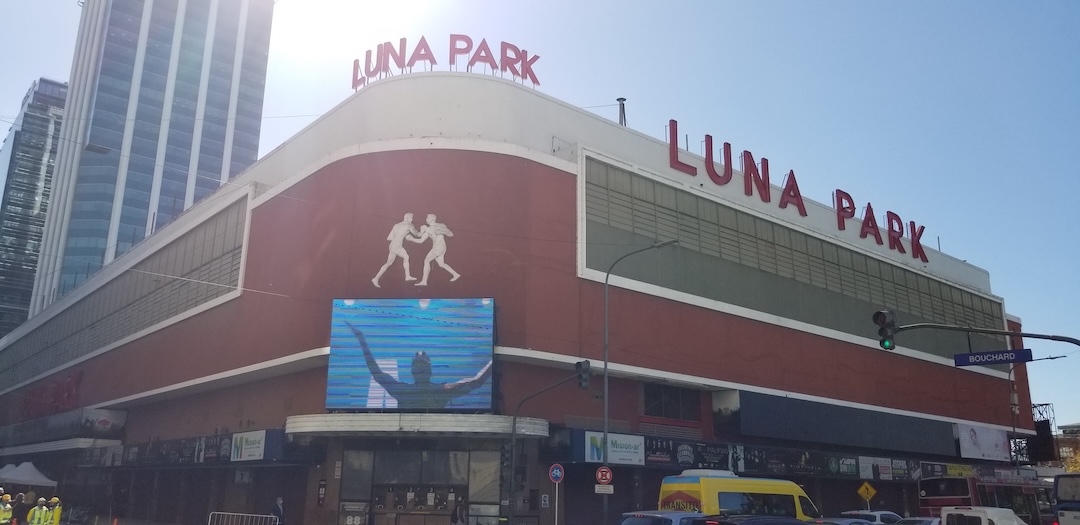
Luna Park is an iconic indoor stadium in Buenos Aires, founded in 1931 by Ismael Pace and José Lectoure. It is located in the San Nicolás neighborhood, between Corrientes and Madero streets. Owned by the Lectoure family until 2013, it was then transferred to Caritas Argentina and the Salesians. The building was designed by architect Jorge Kálnay and inaugurated with carnival celebrations in 1932, with a roof added in 1934. It has hosted historic events such as the wake of Carlos Gardel and Diego Maradona’s wedding. In 2007, it was declared a National Historic Monument. In 2025, an expansion and the construction of a parking facility were announced.
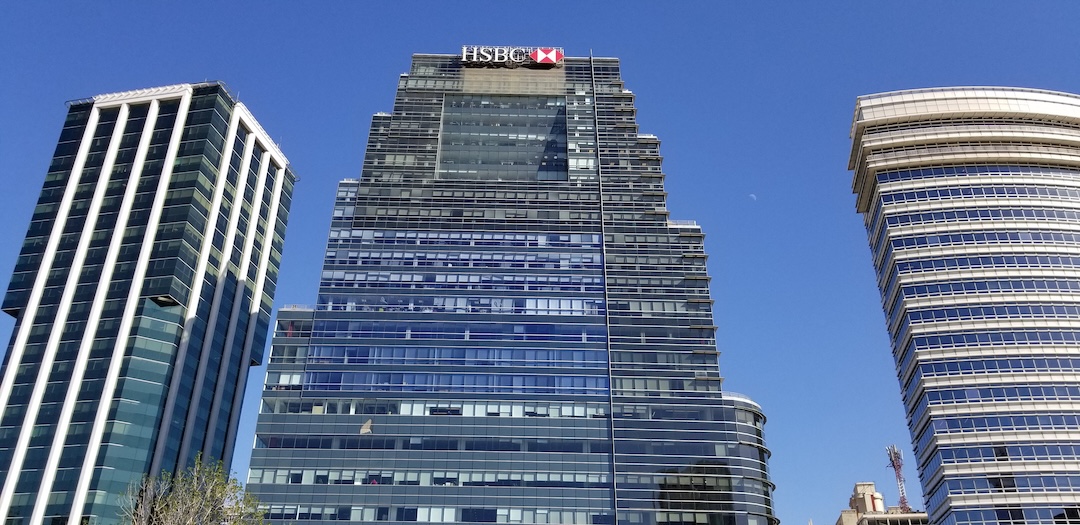
Bouchard Plaza, also known as the La Nación Building, is a modern office building in the San Nicolás neighborhood of Buenos Aires. It is a remodeling of the original La Nación newspaper building, retaining its structure. The original design was by Estudio SEPRA, following a 1955 competition. Construction started in 1960 and finished in 1980, in three phases. The building separates functions: brick facades on the lower floors (printing industry) and glass curtain walls on the upper floors (editorial and offices). Its design offers wide views of the Río de la Plata and Plaza Roma.
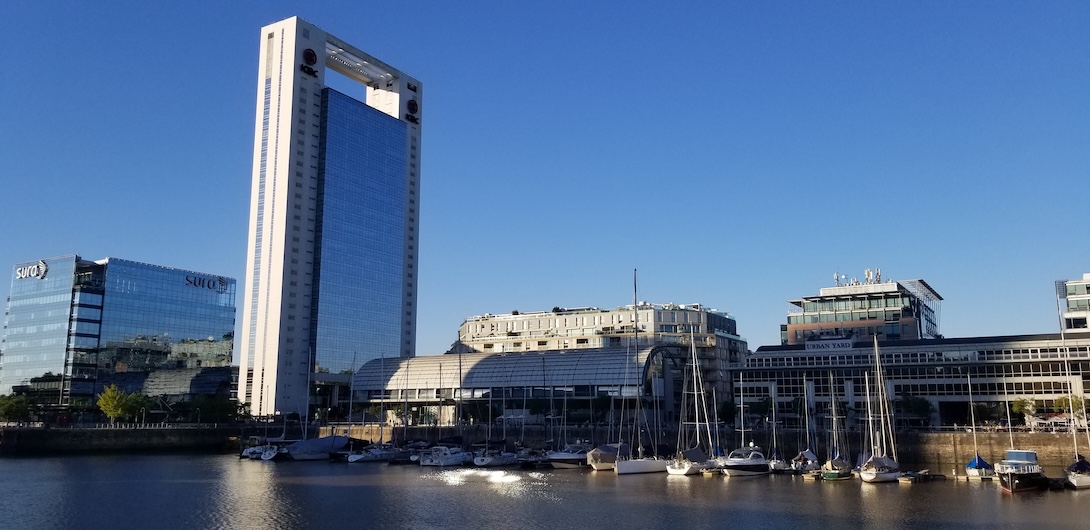
Opened in 2008 in Puerto Madero, Buenos Aires, the AMALITA Museum is a private non-profit institution showcasing a valuable collection of national and international art. Designed by architect Rafael Viñoly, it features a glass dome with movable sunshades. It houses over 250 works, including pieces by Turner, Brueghel II, Klimt, Warhol, and Berni. The collection spans from classical Egyptian and Greek art to 19th and 20th-century Argentine art. The gallery combines a permanent heritage collection with temporary exhibitions, promoting art and culture in a building considered an architectural work of art itself.
This tour is free so everyone can enjoy it. But behind it are hours of preparation, passion, and love for this city. If you felt you discovered something special today, help us keep sharing it. With your donation, you make this possible. Thank you for valuing our work.
Write Us:
Go@free-buenos-aires.tours